KESECO ULTRA energy saver for chillers, HVAC and motors
KESECO ULTRA is a passive energy-saving unit that connects in parallel at the secondary of your main breaker and lowers the active power your motor-driven plant draws for the same work. AIRS is the authorised distributor in India for KESECO Co. Ltd., South Korea. We commit in writing to a saving of minimum 5% where at least 60% of the load is inductive. The more your load fluctuates through the day, the higher the saving tends to be. If your own team cannot validate the projected saving from the measured data, your payment is refunded.
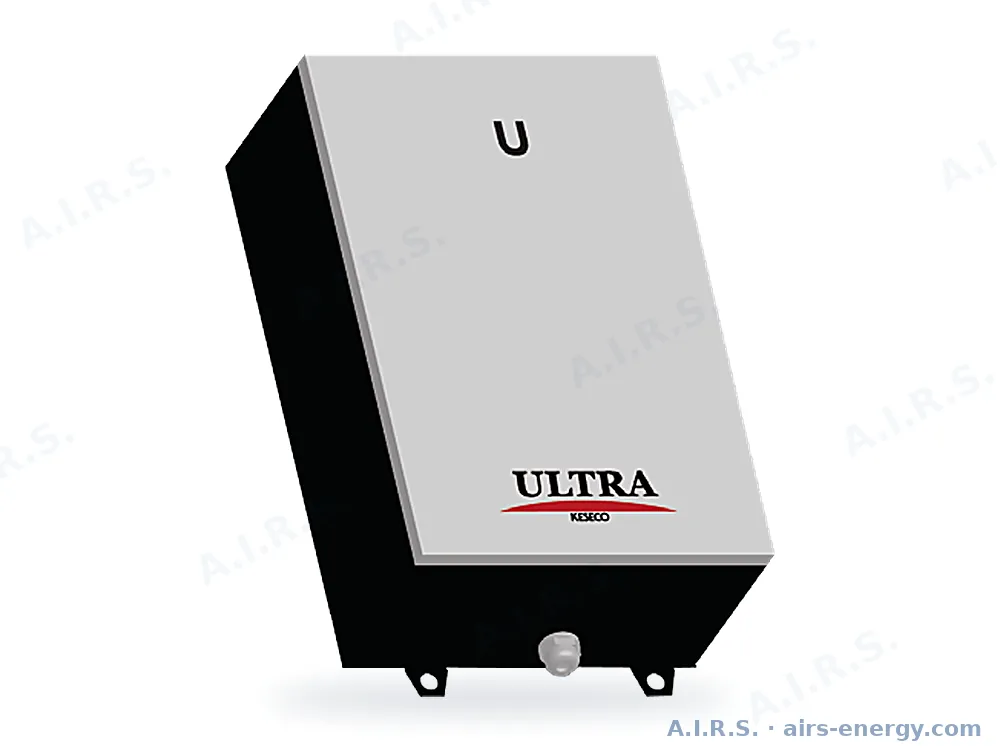
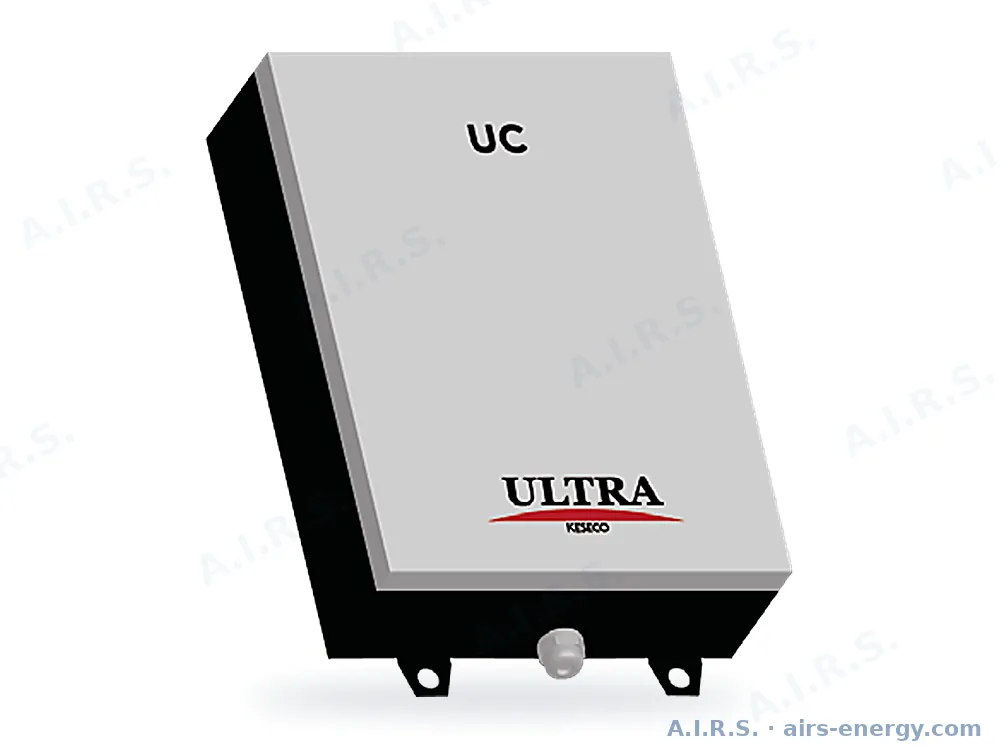
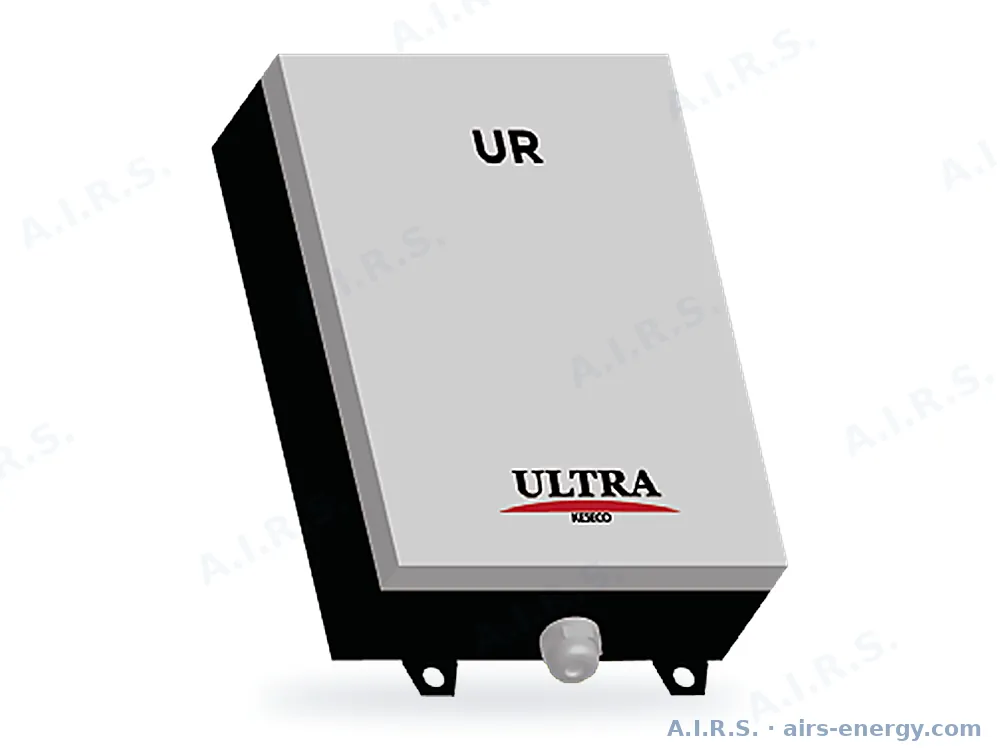
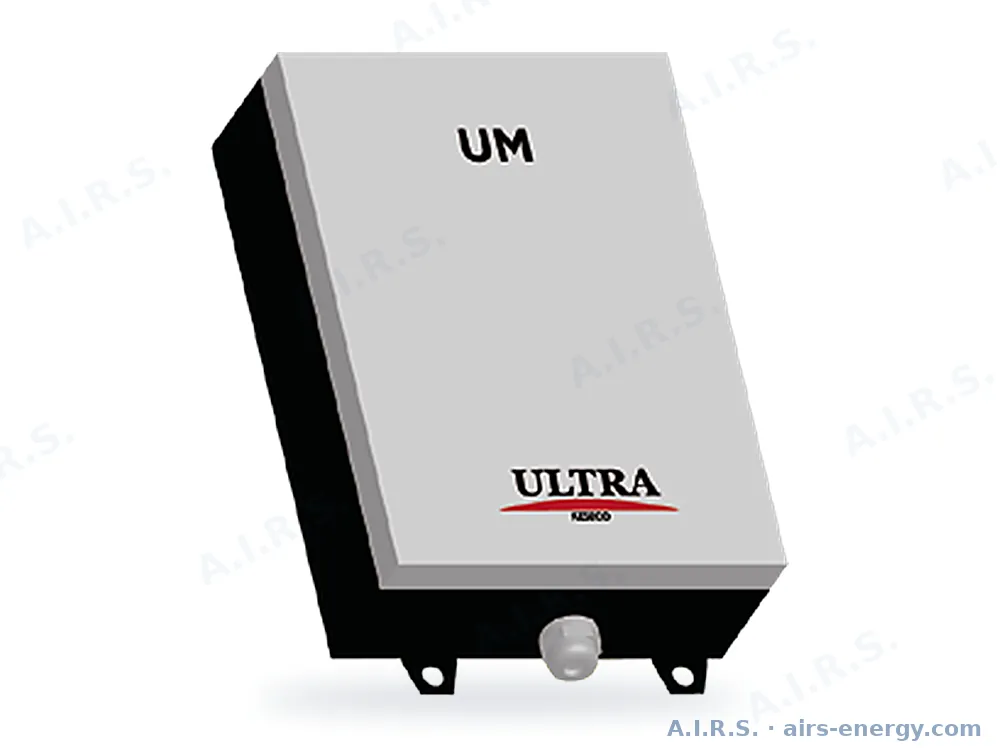
On chillers we have measured savings of 8.15% to 15.64%. Every figure is calculated against the work done, such as kWh per tonne of cooling, not on the raw bill.
Book an energy saving assessment · WhatsApp +91 84888 42227
Where ULTRA fits
ULTRA saves the most where the load is mostly motors and changes through the day. When the inductive share is above about 60%, demand factor is above 60% and load factor is above 70%, savings are highest.
- Water-cooled chillers and brine chillers, screw or centrifugal, for HVAC or process cooling. Every published AIRS reference so far is a chiller.
- HVAC, AHUs, package and ductable AC
- Screw air compressors, pumps, fans and VFD-fed machines
- Main incomers and ACBs on warehouses and buildings with mostly inductive load (HVAC, cold rooms, material handling)
- Low-voltage AC systems only: 100–600 V, 50/60 Hz, 3-phase (single-phase on the small range)
Not a good fit: furnaces, heaters, ovens and other resistive loads (under 3% on average), DC systems, battery and EV charging, and sites with frequent long power cuts and no generator. We will tell you before you spend anything if your site falls into one of these.
How it works, in plain terms
The unit is a sealed steel case. It has no circuit board, no electronics and no moving parts, and it does not draw power for itself.
- Parallel, not series. It connects across the breaker secondary and does not sit in the path of your load current. If the unit faults, the feeder still runs.
- No voltage drop. Unlike voltage optimisers, it leaves the supply voltage unchanged, so downstream equipment is not derated.
- What we measure after installation: lower current and active power (kW) for the same output, lower kWh per unit of work (kWh/TR on a chiller), steadier demand, and on many sites lower harmonic content and cooler-running motors.
- It is not a capacitor bank. If your only problem is a power-factor penalty, an APFC panel is the right equipment.
The unit has no electronics, so there is nothing to read from it. You see the result on the feeder's meter, and that is how we prove it.
How AIRS proves the saving
AIRS measures the result itself. We put BTU meters, three-phase power-quality dataloggers, flow meters and an energy monitoring system on site at our own cost during the trial.
- Baseline: we log current, voltage, PF, kW, kVA, kWh and kVAh on the target breaker for a full production cycle. We also record the main drivers of consumption: cooling delivered (TRH), output, running hours and ambient temperature.
- Agree the index in writing: before installation we agree with you how the saving will be calculated, for example kWh/TR on a chiller or kWh per Nm³ on a compressor.
- Install: the unit goes on during a shutdown you schedule. The adaptation period of 3 days to 4 weeks, depending on model, is logged but left out of the result.
- Post-installation logging: same instrument, same breaker, same length of window.
- Normalise and report: we compare on the agreed index and correct for weather where the load depends on it (IPMVP Option C). You receive the raw data and the workbook along with the report.
Model selection
Model numbers are the kVA rating. Each unit is designed at 0.9 power factor. AIRS sizes from your measured peak plus a design margin of about 35%.
| Model | kVA | Max active power | Suits a measured peak up to about* | Typical use |
|---|---|---|---|---|
| UC-50 / UC-70 | 50 / 70 | 45 / 63 kW | 33 / 47 kW | Package AC, small AHU |
| UC-100 | 100 | 90 kW | 67 kW | Small chiller or brine chiller (~40 TR) |
| UC-200 | 200 | 180 kW | 133 kW | Mid-size HVAC, compressor |
| U-300 | 300 | 270 kW | 200 kW | ~250 TR chiller, building incomer |
| U-500 | 500 | 450 kW | 333 kW | ~350 TR chiller |
| U-700 | 700 | 630 kW | 467 kW | Large chiller or plant feeder |
| U-1000 | 1,000 | 900 kW | 667 kW | Main incomer / ACB |
| U-1500 | 1,500 | 1,350 kW | 1,000 kW | Large main incomer |
*Measured peak × 1.35 ≤ model kW. All units are 3-phase, 100–600 V and 50/60 Hz, with a 5-year warranty and a minimum design life of 10 years. Smaller UR and single-phase models are also available. Final selection is made from logged data, not nameplate ratings.
Measured results
| Site | Equipment | Before → after | Saving | Period |
|---|---|---|---|---|
| Pharmaceutical plant, Gujarat | 350 TR water-cooled screw chiller (ULTRA U-500) | 0.844 → 0.712 iKW/TR; COP 4.20 → 5.14 | 15.64% | Pre 20 Feb–15 Mar 2025; post 23 Mar–4 Apr 2025 |
| Pharmaceutical plant, Gujarat | 600 TR water-cooled chiller | 0.793 → 0.729 iKW/TR | 8.15% | Pre 6 May–26 Jul 2025; post 7 Aug–12 Sep 2025 |
| Chemical plant, Gujarat | Water-cooled chiller | 28.40 kWh saved per running hour | 13.49% | Pre/post campaign |
| Speciality chemicals plant, Central India | 40 TR brine chiller (ULTRA UC-100) | 586 → 492 kWh/day | 10.31% | Pre/post campaign |
| Pharmaceutical warehouse, Gujarat | Warehouse main ACB, 1,000 kVA (ULTRA U-1000) | Weather-normalised 11,075 predicted vs 9,861 kWh/day measured | 11.0% (443 MWh/yr) | 478 metered days, 6 May 2025–31 Aug 2026 |
| Power equipment manufacturer, Gujarat | Admin building incomer, mixed load (ULTRA U-300) | Incomer metered with ULTRA in and out of circuit | 5.98% | ON/OFF trial, Mar–Jun 2026 |
Why we use an index: a chiller's daily kWh rises and falls with the cooling it delivers. Comparing raw bills before and after can hide a saving or invent one, so we compare power per unit of work, such as kWh per tonne of cooling or kWh per running hour.
Why we report a range: at the pharmaceutical warehouse site, the raw before/after comparison showed 27.3%. Adjacent fortnights either side of reconnecting the unit showed 15.5% (12,666 → 10,706 kWh/day). The weather-normalised figure is 11.0%, and that is the one we tell clients to plan against. When we ran the same model over the four months the unit was out of circuit, it returned 0.0%.
ULTRA in Indian industry
Reference orders handled by AIRS (client names withheld; references shared on request with the client's consent):
- Pharmaceutical manufacturer, Gujarat: U-500, U-700, U-1000
- Chemical manufacturer, Gujarat: U-300 (chiller), plus a repeat order for a 135 TR brine chiller
- Speciality chemicals manufacturer, Central India: UC-100 for a brine chiller
- Power equipment manufacturer, Gujarat: U-300 with energy monitoring system
- Pharmaceutical manufacturer, Gujarat: 300 kVA power-quality line filter
Certifications
- CE: Low Voltage Directive (2014/35/EU) attestation, Kiwa Korea, Cert. CA23P3038, covering U-1500 to UC-50
- RoHS certificate (UR series and others)
- KESECO quality system certified to ISO 9001:2015 (ICR, Cert. QI123523, valid to April 2027), with scope covering the design and manufacture of energy-saving devices
- Indian Patent No. 579616, "Power reduction device based on dielectric composite", granted to KESECO on 30 Jan 2026. It covers the ULTRA II generation. KESECO also holds a US patent.
- TÜV performance certificate
The full certificate pack is sent with every quotation.
Frequently asked questions
Is ULTRA a power factor controller or APFC panel?
No. An APFC panel switches capacitors to cancel reactive current. ULTRA is a passive unit with no switching, and its aim is lower kWh. On some sites the power factor also improves, mostly where it starts below 0.9. If you only need to fix a PF penalty, buy an APFC.
Does installation need a shutdown?
Yes, a short one. The unit is only ever fitted on an isolated bus by a licensed electrician, inside a shutdown you schedule.
How long does installation take?
About 30 to 90 minutes per unit. After that, the unit takes 1 day to 4 weeks to adapt, depending on model, before the full saving appears.
What if the saving doesn't come?
We commit a minimum of 5% in writing where at least 60% of the load is inductive, measured on an index agreed before installation. The more the load fluctuates, the higher the saving tends to be. If your team cannot validate the projected saving from the measured data, we remove the unit and refund your payment. At any time you can also ask us to disconnect it for a week, and you will see consumption go back up.
What is the payback?
It depends on your load, running hours and tariff. On a continuous chiller load it is often around a year. We give you the payback for the recommended model and for the models one size above and below.
What is the warranty?
5 years from the date of invoice, and the unit is designed for a minimum life of 10 years. It has no consumables and needs no maintenance; just keep it dry.
Which loads don't benefit?
Resistive loads such as furnaces, heaters and ovens, DC systems, battery and EV chargers, and breakers that run far below the unit's rating or briefly above it. Where these share a panel with motor loads, we usually leave them out of the scope.
Book an energy saving assessment
Nominate one asset, such as your largest chiller, brine chiller or screw compressor. Send us 12 months of kWh and peak kW for that breaker and the single-line diagram. We will log it, size the unit and send you a written saving commitment with a measurement protocol before you commit to anything.
Call or WhatsApp +91 84888 42227 · support@airs.net.in